



Chicken Road takes the old joke about a chicken crossing a road and transforms it into a slot, but its autoplay settings are more important than most players recognise https://chickensroadcasino.com/chicken-road-in-casino/. If you’re in the UK, the first thing to understand is that real-money online slots licensed here not anymore offer autoplay as standard. The UK Gambling Commission introduced that rule, and it applies Chicken Road on any UK-regulated platform. This guide details how the game plays, what to review in the paytable, and how autoplay works in demo modes or outside the UK. Instead of seeing autoplay as an afterthought, pause to grasp the exact controls, the limits you can configure, and why the UK ban is in place. The sections below include the theme, RTP, layout, bonus features, bet ranges, and then the autoplay settings that are relevant most to UK players.
Chicken Road’s Design, Signs, and Essential Gameplay Features
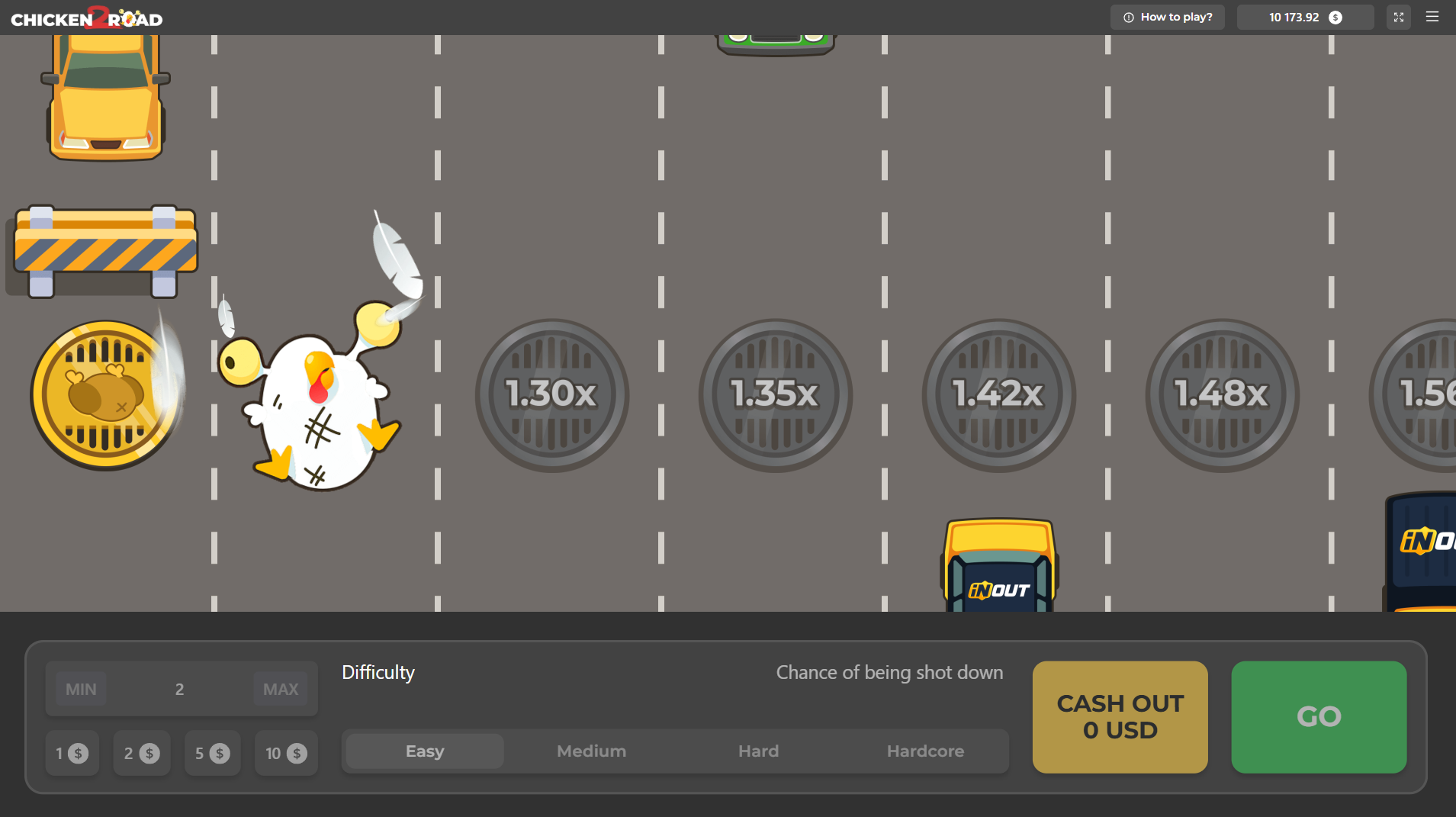
Chicken Road embraces a farm-road theme with animated graphics. You’ll see a chicken, a fox, a corncob, an egg symbol, a barn, and street-related symbols like tyres or traffic signs. The main game uses conventional slot logic: pick a bet, hit spin, and see the reels land. Winning lines usually appear left to right on live paylines, and the paytable lists all symbol’s worth. The chicken usually rewards the most out of standard symbols, while playing card values (A, K, Q, J, 10) are at the low end. As the game is designed around a path across the road, certain editions include a incremental element in which the chicken advances forward on a bonus trail, but you can’t assume that without consulting the official game sheet. What maintains Chicken Road engaging isn’t really a single unique mechanic. It is the clear, legible layout and a bonus round that shows up regularly enough to preserve sessions diverse. If you’re new to the game, consult the paytable and review the rules first; symbol behavior and pay values can change between editions.
Special Features, Wilds, Scatters, and Multiplier Symbols
Chicken Road typically contains a wild symbol, a scatter, and a free spins round, but the names and behaviours may differ. Wilds replace standard symbols to finish winning lines, and in some versions a wild may appear only on certain reels, like reels two, three, and four. Scatters frequently activate a free spins bonus with a set number of spins, generally between eight and fifteen. During free spins, an increasing multiplier might grow after every win or after every road-crossing event, increasing later payouts. Some builds also include a pick-me or trail bonus whereby the chicken moves along a road to gather cash prizes and multipliers. Don’t assume a feature exists without the official paytable confirms it. The most important check before using any autoplay feature is the stop conditions are offered, because bonus triggers and feature wins should ideally pause automated play. In the UK, as autoplay isn’t permitted, you trigger these features manually, offering a natural pause to evaluate each result.
Chicken Road RTP, Volatility, and How They Influence Sessions
RTP, or return to player, is the proportion of total wagers a slot pays back over a large number of spins. Chicken Road does not have one fixed RTP across all platforms; the same title can be found with different return settings, typically between 94% and 96.5% according to the operator and the build. Volatility describes how wins are distributed. Chicken Road is typically classed as medium volatility, which means a mix of smaller base-game hits and occasional larger bonus payouts, although some versions lean higher. A medium-volatility profile fits players who want regular feedback without waiting through long dry spells. For UK players, the RTP needs to be shown in the game information panel, so there’s no need to guess. When comparing versions of Chicken Road, selecting the highest RTP on display is a sensible starting point. But RTP does not predict short sessions; you can still lose several hundred spins in a row. Volatility and RTP also matter for autoplay planning, because long automated runs in higher-volatility builds can drain a balance fast.
Structure, Paylines, and How Winning Combinations Are Determined
Most variants of Chicken Road use a five-reel, three-row grid, but the count of paylines or ways to win differs by release. Common setups include 10, 20, or https://www.skysports.com/football/news/30964/9575436/soccer-saturday-super-6-winner-player-predicts-all-six-premier-league-correct-scores-to-land-gbp250k-jackpot 25 fixed paylines, while some newer versions use 243 ways-to-win mechanics that reward whenever identical symbols land on neighboring reels. On a locked-payline machine, only symbols aligned along an active path count. On a ways-to-win title, the specific location inside each reel is less important, but at least one paired symbol must appear on sequential reels starting from the first reel. The paytable displays how much each match pays as a multiplier of the active line wager or full bet. Scatter symbols, if present, typically pay anywhere on the reels and are not linked to a payline. For Chicken Road specifically, the best approach is to access the rules page inside the game before you stake. Check whether the layout is set or adjustable, because that changes how many coins are taken per spin.
Wagering Range, Highest Win, and Bankroll Planning

Chicken Road is built to cater to a broad range of budgets. In several versions the smallest wager is around 0.10 per spin, while the highest can attain 50 or 100, relying on the operator and the payline setup. The highest win is frequently listed as a multiple of the total stake, for instance 2,000x, 5,000x, or higher, but you need to verify the exact figure in the game’s payout table. Bankroll planning matters more than chasing the top prize. If you have a 50 budget, steer clear of maximum bets; even a short losing run can destroy a session. A sensible rule: break down your session bankroll by at least 100 spins. That offers a approximate per-spin stake and diminishes the chance of going broke before a bonus round emerges. Chicken Road’s medium volatility signifies bonus rounds show up with reasonable frequency, but they’re not ever guaranteed. Before switching to manual play or any offered autoplay option, determine a hard stop-loss and a target cash-out point.
Autoplay Configurations: What UK Players Should Anticipate
For UK players, the autoplay scenario in Chicken Road is clear-cut: on any slot provided by a UK-licensed operator, autoplay is disabled by regulation. Since 31 October 2021, the UK Gambling Commission has outlawed autoplay functions on online slots, along with features that accelerate play or disguise losses as wins. get the scoop That means you won’t see an autoplay button, a spin-count selector, or loss-limit controls within a real-money Chicken Road game on a licensed platform. The rule holds even if the game provider built an autoplay mode into the software, operators must disable it for UK customers. Outside the UK, or in free-play demo versions, autoplay settings may still appear. Those settings often enable you to pick a number of spins, define a loss limit, set a single-win limit, and cease when a bonus round starts. UK players who seek similar control should set their own external limits, like a session timer and a bankroll stop-loss, before gaming manually.
Safe Autoplay Use and Concluding Playing Tips
Even though autoplay is not offered to UK Chicken Road players, the principles behind its settings still matter. A responsible session begins with three decisions: how much to stake per spin, how much you are prepared to lose before stopping, and how much of a win is sufficient to walk away. Manual play renders these decisions more straightforward to stick to, because every spin takes a deliberate action. Some players view manual play slower, but the pause between spins cuts down on impulsive chasing. If you’re playing a demo version or an international site where autoplay exists, use the lowest number of spins and always set a loss limit; never rely on an automatic stop for a bonus round without additionally setting a cash limit. The best next step for any UK player is to open the Chicken Road information panel, confirm the exact RTP, paylines, and features, then play a few demo spins with the same stakes you would use for real money. That creates familiarity without risking your balance.
UK players should view the absence of autoplay in Chicken Road as a protective design choice, not a missing feature. The game still offers plenty of variation through its bonus round, multipliers, and potential win sizes, but those features perform best when you stay in control. Because autoplay is banned on UK-regulated slots, the most realistic guide is to arrange each session manually: check the paytable, set a fixed number of spins or a time limit, and stop when either is reached. For players outside the UK, or those trying a demo, the same rules remain valid even where autoplay buttons exist. The key is not to go after the maximum win through long automated runs. Instead, verify the actual RTP and paylines for the Chicken Road version you are playing, then treat every spin as a separate decision. That approach preserves your bankroll and maintains the farmyard journey fun rather than mechanical.